WULOLIFE
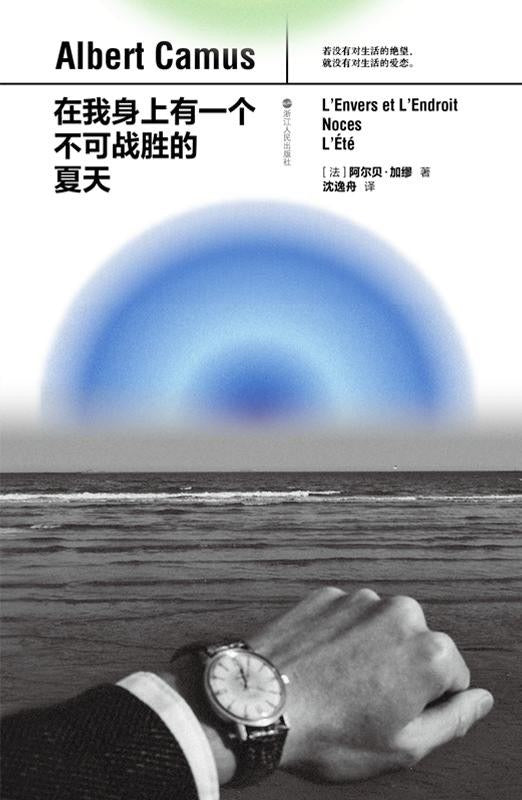
*Return to Algiers* by Albert Camus, Zhejiang People's Publishing House
*Return to Algiers* by Albert Camus, Zhejiang People's Publishing House
Couldn't load pickup availability
Description
About the Book · · · · · ·
In 1937, Camus first encountered the absurd in his debut work, "Betwixt and Between." In his twenties, his thoughts had already touched the boundaries of existence. The following year, he brought his body into his writing, turning to the sun, rocks, wind, and salt of the Algerian Mediterranean coast, immersing himself in the perception of land and flesh. "Nuptials" thus became one of the brightest chapters in his work.
In 1954, Camus gathered the essays he had written about the Mediterranean since 1936 and published "Summer." In an era of absurdity and chaos, he used calm, restrained language to reflect on how one should live honestly and honorably, and how to cultivate "an invincible summer" in the dead of winter.
This book collects three essay collections: "Betwixt and Between," "Nuptials," and "Summer," spanning seventeen years of writing, together forming Camus' spiritual journey from sensual experience to rational contemplation, from night to light.
About the Author · · · · · ·
Albert Camus (1913—1960)
A representative figure of French existentialist literature and "absurdist philosophy," he grew up in the slums of North Africa. His father died in World War I, and he was raised by his mother, who worked as a maid. In 1942, the publication of "The Stranger" brought him widespread fame and established the creative theme that permeated his entire life: how man resists the nothingness of life in an absurd world.
Absurdity, rebellion, freedom, and love were the themes of Camus' life. At the age of forty-seven, Camus died suddenly in a car accident. This man, born under the dazzling sun of the seashore, risked his life to participate in the resistance during World War II. Camus' spiritual trajectory was a process from "sensual integrity" to "moral clarity." He saw the absurdity of the world but refused to succumb to nothingness. In a world that constantly demanded "taking sides," he rejected radicalism, always choosing humanity as his measure.
